
CGM vs BGM: How do they differ? The answer might change your health.


Many people are familiar with fingertip blood pricks to check sugar levels, known as BGM (Blood Glucose Monitoring). But did you know that today there is an even more advanced technology like CGM (Continuous Glucose Monitoring) that is completely changing the lives of diabetes patients?
For those who need to manage blood sugar levels, monitoring is essential. Currently, there are 2 main methods used: BGM (Blood Glucose Monitoring) and CGM (Continuous Glucose Monitoring)
BGM (Fingertip Blood Glucose Meter)
- It is the traditional method that many people are familiar with. It is easy to use and affordable, but requires multiple blood pricks per day, making it inconvenient and unable to show continuous changes in blood sugar levels.
CGM (Continuous Glucose Monitoring Device)
- It uses a small sensor attached to the skin to monitor sugar levels 24 hours a day. Users can therefore see real-time data, including up-and-down trends of sugar, which helps prevent hyperglycemia or hypoglycemia much better.
Comparison: CGM vs SMBG
| Topic | Continuous Glucose Monitoring System (CGM) | Self-Monitoring of Blood Glucose (SMBG) |
| How it works | Automatically measures glucose levels every 1–5 minutes using a sensor attached to the back of the upper arm.
| Measures blood sugar levels by drawing blood from a fingertip and placing it on a test strip.
|
| Monitoring Frequency | Monitors 24 hours a day, providing continuous data throughout day and night. | Checked only when the patient pricks themselves, usually 1–6 times a day as recommended by the doctor. |
| Glucose Reading Graph | Displays continuous glucose readings and glucose trends.
| Displays blood sugar levels only at the specific time the test is performed.
|
| Usage | Convenient, no frequent pricks required, but the sensor must be replaced according to its lifespan (e.g., every 7–14 days). | Lower cost, easy to use, but frequent pricking may cause pain. |
| Accuracy | Significantly higher accuracy in newer models, but readings may lag 5–10 minutes behind actual blood (because it measures interstitial fluid). | Direct readings from actual blood, thus considered directly more accurate. |
| Alerts | Features an automatic alert system when sugar levels are too high or too low. | None, users must prick themselves to know. |
| Cost | Relatively high (depending on brand and model). | Cheaper, used as the primary method in many countries. |
| Who it is suitable for | Type 1 diabetes patients, those who use insulin multiple times/day, children, and people with unaware hypoglycemia. | General diabetes patients, those who manage with diet control and oral medications. |


Why does CGM meet user needs better?
- CGM does not just tell a "number" but also shows the "direction" of blood sugar. It is suitable for those who want to closely control diabetes, reduce the risk of complications, and live their daily lives with more confidence.
Get to know CareSens Air

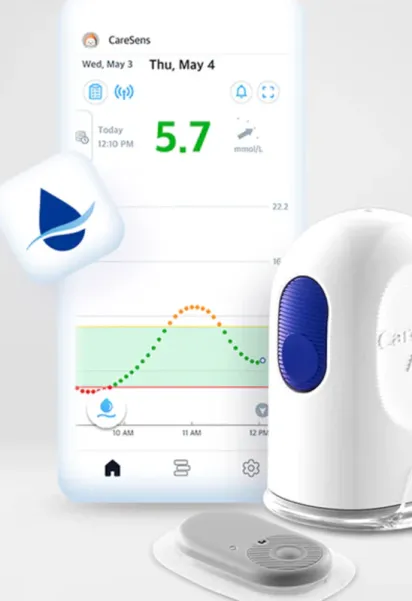
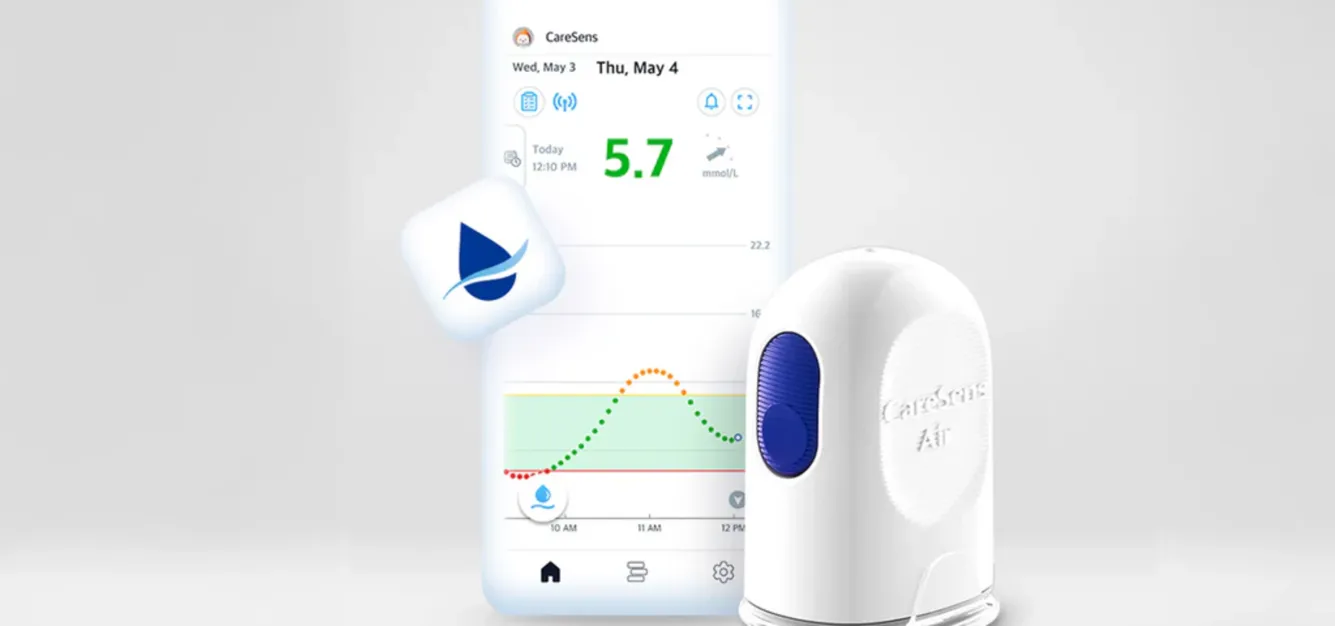
When talking about CGM, one of the devices gaining attention is CareSens Air, which is designed to make sugar monitoring easy and seamless with daily life.
Small, lightweight, and comfortable; barely noticeable when attached to the skin.
Displays real-time sugar values via smartphone.
Features an alert system when sugar is abnormally high or low.
Shows both current values and changing trends, allowing a clearer understanding of the body.
Simple Summary
BGM → Checks sugar via fingertip pricks; shows values only at the moment of testing, requires multiple actions per day, and may miss periods when sugar fluctuates.
CGM → Uses a sensor attached to the skin; continuously tracks sugar levels all day, showing both current values and up–down trends, along with alerts when abnormal.
CareSens Air → A small CGM device connected to a smartphone; allows convenient viewing of real-time data, helping to understand the body and plan health more easily.